Prev
Announcement of Receipt of Notice of Allowance for Japanese Invention Patent on Manufacturing Method of Artificial Dressing

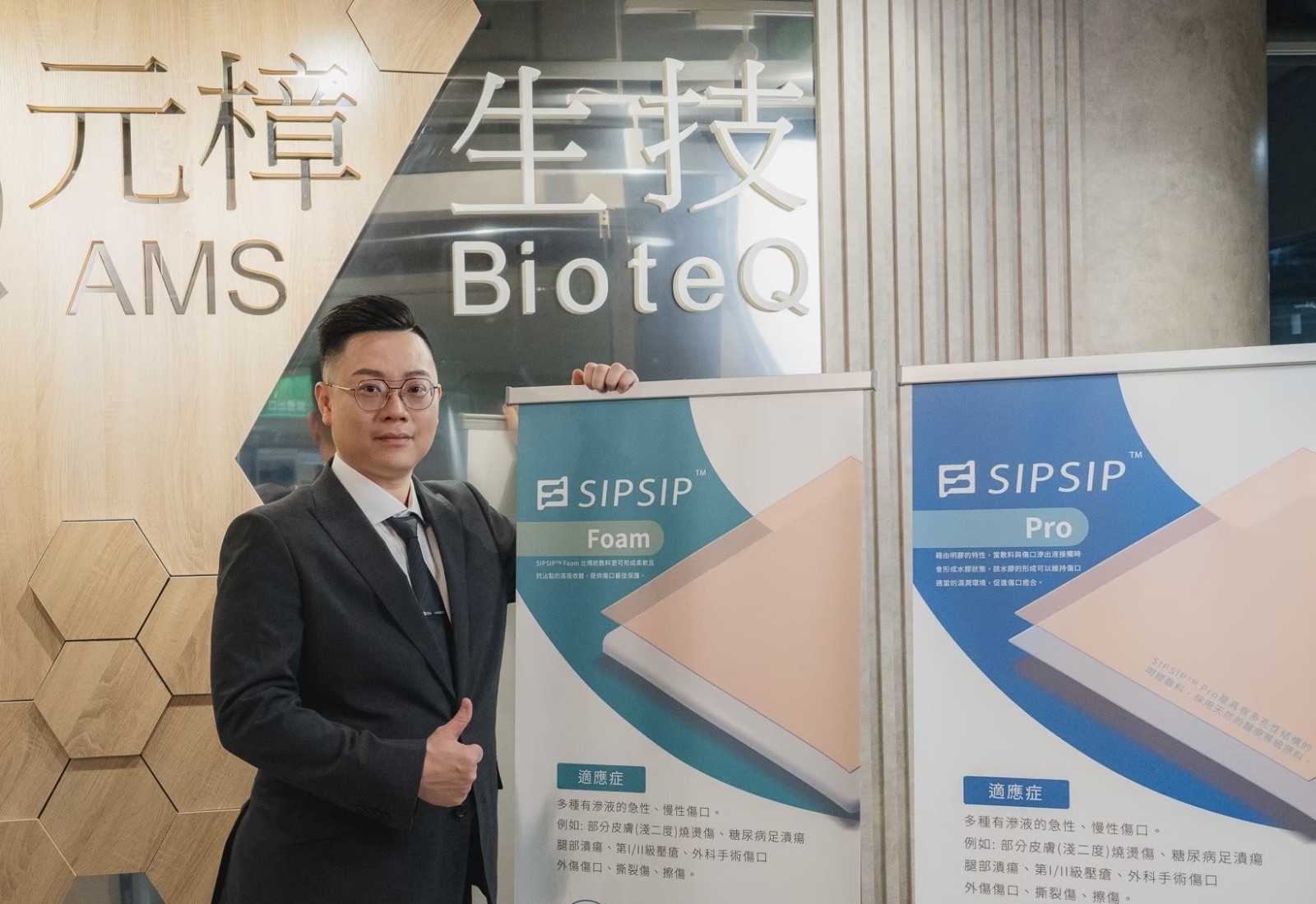
AMS BioteQ Chairman Tsai Yi-Ju stated that the grant of this Japanese invention patent not only validates the Company’s strong R&D capability in wound dressing manufacturing technology, but also lays a critical foundation for expanding into international markets with strong demand in elderly care.
Wound dressing changes are often one of the most painful moments for patients. Traditional gauze dressings frequently adhere to newly formed tissue upon removal, causing severe pain and repeated disruption of wound healing, thereby delaying recovery. AMS BioteQ Co., Ltd. is working to change this situation.
On April 15, 2026, the Company received official notification from the Japan Patent Office (JPO) confirming that its porous artificial dressing manufactured using freeze-drying technology has successfully passed substantive examination and been granted a Japanese invention patent (Application No.: Japanese Patent Application No. 2024-153333). This marks the first patent protection in the Japanese market for the Company’s core wound care technology, following its patent portfolio in Taiwan.
In simple terms, the product is more like a structured sponge than a piece of fabric.
The patented process uses gelatin as the base material and applies precise foaming and freeze-drying techniques to create a sheet-like dressing with a uniformly porous internal structure. These pores enable the dressing to absorb approximately 25 to 35 times its own weight in wound exudate, while maintaining a moist wound environment—widely recognized in modern wound care as a key factor in accelerating healing.
Upon contact with wound fluid, the dressing gradually transforms into a gel-like structure that conforms to the wound bed, reducing adhesion during removal and significantly minimizing secondary tissue damage during dressing changes. It is suitable for burns, post-surgical wounds, pressure ulcers, and chronic wounds, and is compatible with gamma irradiation sterilization, meeting sterile medical device standards.
Japan is one of the most rapidly aging societies in the world, with more than 29% of its population aged 65 or above. Chronic wounds—particularly pressure ulcers and diabetic foot ulcers—remain a persistent clinical challenge in long-term care facilities and hospitals, driving sustained demand for advanced wound care products.
The grant of this Japanese invention patent provides legal protection for the Company's core manufacturing technology in Japan, establishing a critical intellectual property foundation for future commercialization and partnership negotiations with local distributors.
The Company will complete the patent registration procedures within the statutory period to secure formal patent rights in Japan. Furthermore, the positive examination result from the Japan Patent Office may serve as a basis for filing accelerated examination under the Patent Prosecution Highway (PPH) program with the United States Patent and Trademark Office, potentially shortening the review timeline. The Company is also evaluating accelerated examination procedures with the Taiwan Intellectual Property Office to systematically expand its global intellectual property protection.
A patent is not the end point, but the entry ticket to the market. The Company will continue to advance regulatory filings, clinical validation, and market development for its core product lines, and will disclose material progress in accordance with relevant regulations.